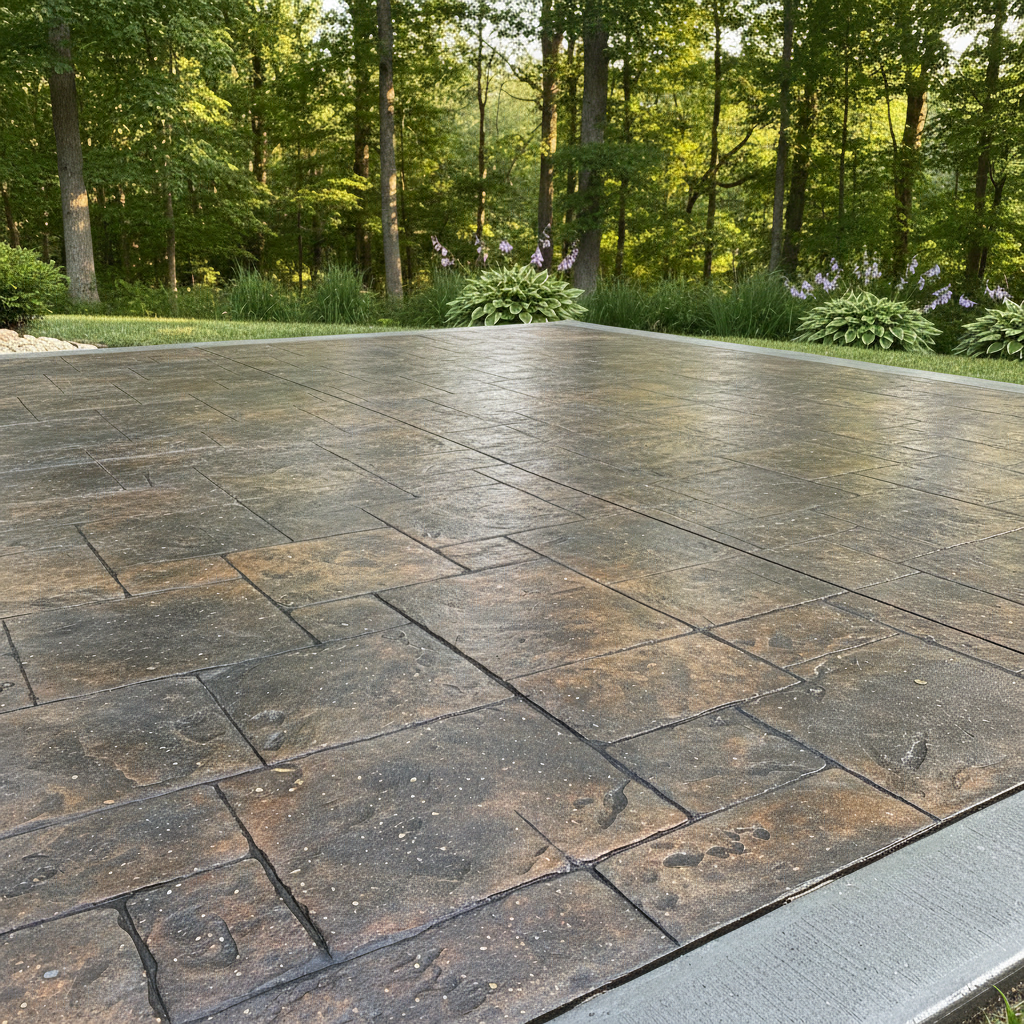
What exactly is decorative concrete? Is it just stamped concrete?
That’s a great question, and honestly, I hear it a lot. When folks in Oak Ridge talk about “decorative concrete,” their minds often jump straight to stamped concrete. And sure, that’s a big part of it. Stamped concrete is where we press patterns and textures into freshly poured concrete, making it look like brick, stone, or even wood. It really does look fantastic for patios, walkways, and driveways.
But decorative concrete? It’s actually a much broader category. For instance, there’s stained concrete. We use acid or water-based stains to create rich, translucent colors that really soak into the surface. Then you’ve got polished concrete; we grind and polish the surface until it shines like natural stone. And what about concrete overlays? Those are thin layers we put right over existing concrete to give it a whole new look – maybe a different texture, color, or even a stencil pattern. We also do exposed aggregate finishes, washing away the top layer of cement paste to show off the beautiful stones underneath. So, while stamped concrete is super popular, it’s just one of many ways we can make concrete look absolutely amazing.
How long does decorative concrete really last in our East Tennessee weather?
Durability is always a top concern, especially with our wild weather here in Oak Ridge. We get those hot, humid summers, then freezing winters with ice and snow, and plenty of rain in between. Good news: decorative concrete is incredibly tough. When we install it right – and that’s the crucial part – it can easily last for decades. We’re talking 20, 30 years or even more, just like regular concrete.
The biggest factors for how long it lasts are proper installation – things like good sub-base prep, the right concrete mix, and correct curing. After that, sealing is key. A good quality sealer protects the surface from moisture, UV rays, and abrasion. This is super important for stopping fading and wear. You’ll want to reseal it every few years, depending on how much traffic it gets and how much sun hits it. For example, a decorative driveway that sees a lot of sun and car traffic might need resealing more often than a covered patio. But generally, it holds up extremely well against the elements we see around here, even with our clay-heavy soils that can sometimes cause issues if drainage isn't handled correctly.
Is decorative concrete slippery, especially when wet?
That's a totally valid concern, especially for outdoor spots like pool decks or walkways. Nobody wants an unexpected slip and fall, right? The truth is, any smooth, hard surface can get slippery when wet, and concrete is no different. But with decorative concrete, we have several ways to deal with this.
When we’re doing stamped concrete, many of the patterns – especially those that look like natural stone or wood – already have some texture. This texture gives you a bit of natural grip. Beyond that, we can add anti-slip additives to the sealer. These are usually fine, grit-like particles that create a subtle, non-abrasive texture on the surface without changing how it looks. For areas like pool surrounds, we can also use broom finishes or exposed aggregate, which naturally offer excellent traction. So, no, it doesn't have to be slippery. We'll definitely talk through the best options for your specific project to make sure it's safe.
What's the typical cost difference between decorative concrete and other materials like pavers or natural stone?
Cost is always a big part of the decision, isn't it? Generally speaking, decorative concrete, especially stamped or stained, usually costs less than natural stone or high-end pavers. You get that same high-end look without the hefty price tag for materials and labor. Natural stone, for instance, means laying individual pieces, which is super labor-intensive, and the stone itself is expensive. Pavers are a good middle ground, but they can still be pricier than decorative concrete, and then you have to deal with weeds growing between them or them shifting over time.
With decorative concrete, you're getting one continuous surface. That means less chance for weeds to sprout or things to shift. The initial investment for decorative concrete is often lower, and its long-term durability and low maintenance can save you money later on. Of course, the exact cost depends on how complex the design is, the type of decorative finish you choose, and the size of the area. We at Valley Concrete always give clear, detailed estimates so you know exactly what you're getting into.
Can you put decorative concrete over my existing, plain concrete patio?
Absolutely, in many cases, yes! This is where concrete overlays really shine. If your existing concrete patio is in decent shape – meaning it's not severely cracked, heaved, or crumbling – we can often apply a decorative overlay right over it. This is a fantastic way to give your patio a complete facelift without the expense and hassle of tearing out and repouring the old slab.
The overlay is a thin, polymer-modified cementitious coating that we can color, stamp, stencil, or texture to create a brand new look. It's much thinner than a new slab, usually somewhere between 1/4 inch and 1/2 inch thick. We'll need to inspect your current patio first, just to make sure it's a good candidate. We look for structural integrity; minor cracks can often be repaired and prepped, but major issues mean an overlay isn't the right solution. If it's structurally sound, though, an overlay can transform an old, boring slab into something beautiful and modern.
What kind of maintenance does decorative concrete need?
One of the best things about decorative concrete is how little maintenance it needs, especially compared to some other outdoor surfaces. For regular cleaning, a simple sweep to get rid of debris and then a wash with a hose and mild detergent is usually all it takes. For tougher spots, a soft-bristle brush can help.
The most important maintenance step, as I mentioned earlier, is resealing. Depending on the type of sealer we use, how much traffic it gets, and sun exposure, you'll typically want to reseal every 2-5 years. This protects the color, stops staining, and keeps the surface's integrity. It's not a difficult job, and it goes a long way in preserving the beauty and extending the life of your decorative concrete. We'll give you specific recommendations for your project, but generally, it's pretty hands-off once it's installed.
Are there any design limitations or colors that don't work well?
With decorative concrete, the design possibilities are pretty vast. We can make it look like almost any natural material – wood planks, flagstone, brick, slate, even cobblestone. Color-wise, we have a huge palette to work with, everything from earthy tones to vibrant hues. Stains offer those translucent, varied looks, while integral colors or color hardeners give you more opaque, consistent shades.
The only real