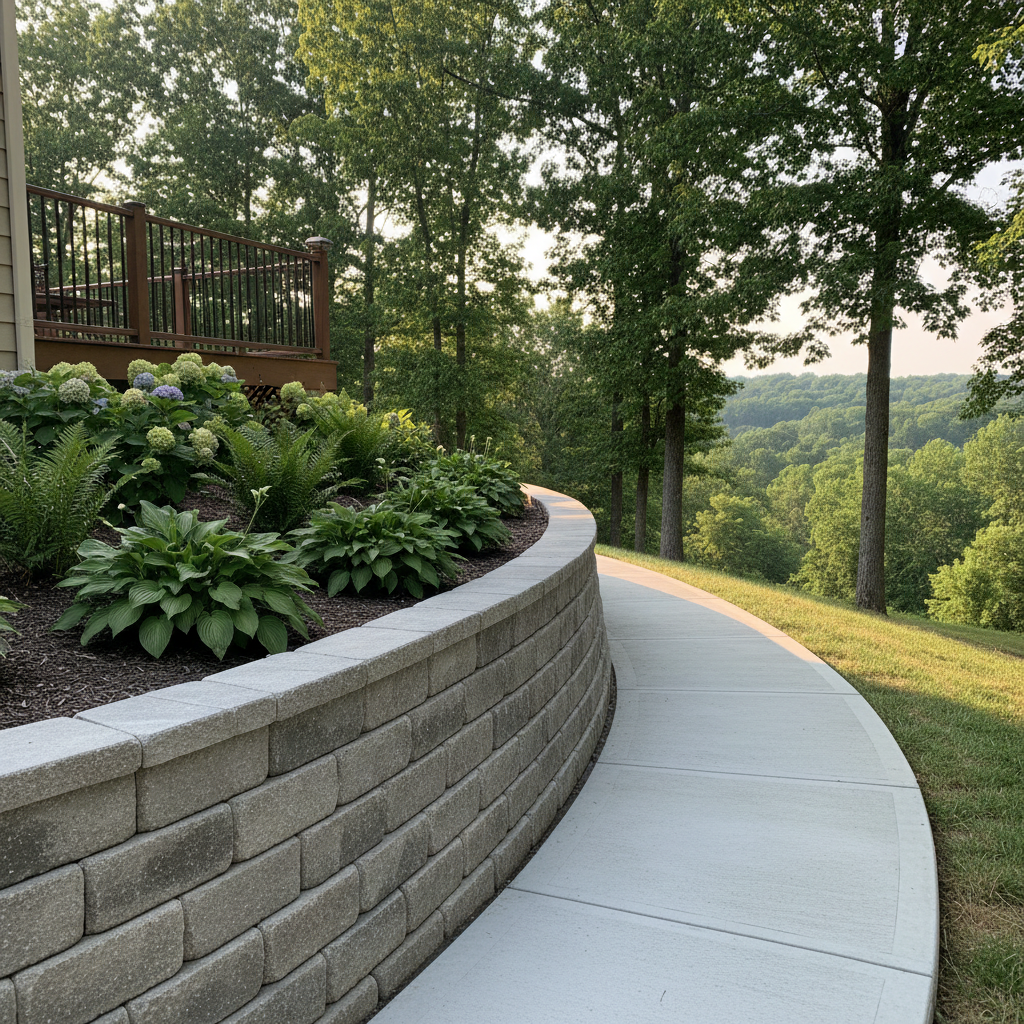
You're standing in your yard, maybe it's got a bit of a slope, or you just need a flat spot for a patio or garden. A retaining wall often feels like the perfect solution. Concrete retaining walls are tough, they last, and they really can change how your property looks and feels. But I've seen plenty of folks right here in Oak Ridge make some pretty common blunders. These usually end up costing them a lot of money and a real headache down the road. So, let's talk about what to keep an eye out for.
Mistake #1: Skipping the Site Assessment
This is probably the biggest one, honestly. You can't just slap a retaining wall anywhere. The soil conditions around Oak Ridge, especially in spots like Cedar Hill or Robertsville, can be pretty tricky. We've got a real mix of clay, shale, and sometimes surprisingly rocky ground. A pro really needs to come take a look at your specific site. They'll check the slope, the soil type, and how water drains. If you don't get this part right, you're building a wall that's just waiting to fall apart. It could lean, crack, or even collapse. Then you're stuck paying to tear it down and build it all over again.
Mistake #2: Underestimating Drainage Needs
Water is the arch-nemesis of any retaining wall. If you don't have good drainage behind that wall, hydrostatic pressure starts to build up. That's just a fancy way of saying the water pushes hard against the wall. Over time, that pressure will make it bulge, crack, or even fail completely. I've seen walls that looked great for a year or two, then after a really heavy spring rain, they start to bow out. You absolutely need a good drainage system behind the wall – think gravel, perforated pipes, and weep holes. They're essential. Don't let a contractor tell you it's not necessary just to save a few bucks. It's not optional, especially with all the rain we get here in East Tennessee.
Mistake #3: Ignoring Local Building Codes and Permits
This isn't just about being a good neighbor; it's about protecting yourself. Most retaining walls over a certain height (often 4 feet, but that can change) need a permit from the city or county. They also have specific engineering rules to follow. If you build a wall without a permit, or if it doesn't meet code, you could get fined, forced to change it, or even made to tear it down. And if you ever try to sell your house, an unpermitted structure can be a huge red flag for buyers and their inspectors. A good contractor, like us at Valley Concrete, will know these codes inside and out and handle the permitting process for you. If a contractor tries to talk you out of getting a permit, that's a massive red flag, wouldn't you say?
Mistake #4: Choosing the Wrong Contractor (or DIYing Too Much)
Look, I get it. Everyone wants to save money. But a retaining wall isn't really a weekend DIY project, not unless it's tiny and just for show. This is a structural part of your property. You need someone with experience, the right tools, and a solid grasp of how things are engineered. Don't just pick the cheapest bid. Ask for references, look at their past work, and make sure they're licensed and insured. A cheap wall that fails costs way more than one built properly. I've heard horror stories of walls crumbling after only a year because the contractor either didn't know what they were doing or cut corners on the foundation or backfill.
Mistake #5: Neglecting the Foundation
A retaining wall is only as strong as what it's built on. The foundation needs to be dug to the right depth, on stable soil, and often reinforced with rebar. If the foundation isn't right, the wall will settle unevenly, crack, and eventually fail. This circles back to the site assessment – you really need to understand what you're building on. A lot of folks think the part of the wall you can see is the whole story, but what's underground is just as, if not more, important.
Building a concrete retaining wall is a big investment, no doubt about it. But when it's done right, it adds value and makes your home more functional for decades. Just make sure you're steering clear of these common mistakes. Do your homework, ask the right questions, and don't be afraid to walk away from a contractor who gives you a bad feeling or tries to cut corners. Your sanity is definitely worth it.