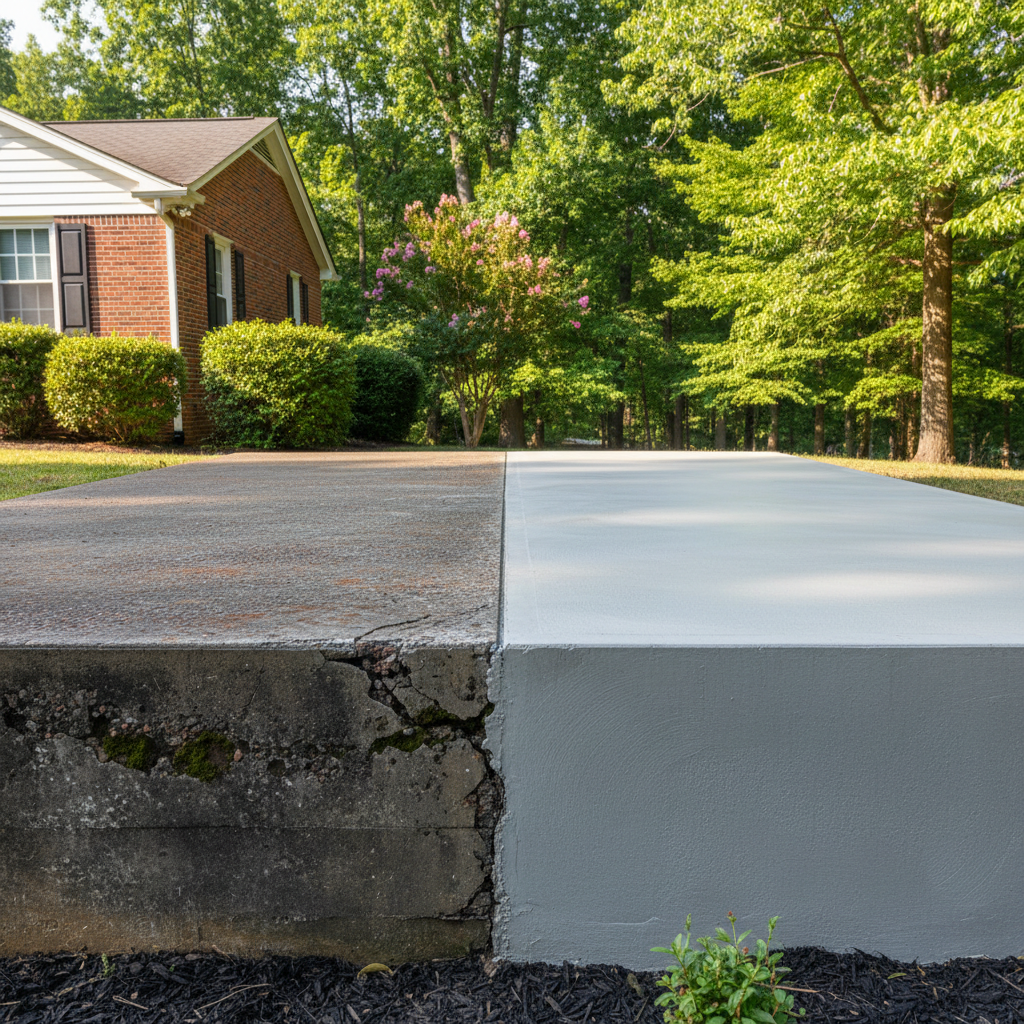
Building a new home or adding on to your existing one? One of the biggest decisions you'll make, and one that sets the stage for everything else, is your foundation. Here in Oak Ridge, you'll mostly see two main types: slab-on-grade or a crawl space. People ask me all the time which one's better, and honestly, it depends on a few things. Let's talk through it.
Slab-on-Grade Foundation: The Basics
A slab-on-grade foundation is exactly what it sounds like: a large, thick concrete slab poured directly on the ground. It's usually reinforced with steel rebar or mesh, and the edges are thicker to form an integral footing. Your plumbing and electrical lines get run through the ground and embedded directly in the concrete before it's poured.
Cost:
Generally speaking, a slab-on-grade is the most economical option upfront. You're using less material – no block walls, no separate floor joists, no subfloor. The labor involved is typically less complex too. If you're trying to keep initial construction costs down, a slab is often the way to go. That's a big reason why you see so many newer homes in areas like the Groves or Hendrix Creek built on slabs.
Durability:
Slabs are incredibly durable. They're solid concrete, so they're resistant to pests like termites and don't rot or mold like wood can. They provide excellent thermal mass, which can help with energy efficiency, keeping your home cooler in the summer and warmer in the winter once the slab heats up or cools down. The biggest durability concerns come from ground movement or improper preparation, which can lead to cracking. But with proper site prep and reinforcement, a slab can last a lifetime.
Maintenance:
Maintenance for a slab is pretty minimal. You don't have to worry about moisture issues in a crawl space or checking for pests under your house. The main thing you'll be looking for is any signs of cracking in the concrete itself or in the finished flooring above it. The downside? If you have a plumbing leak under the slab, finding and fixing it can be a real headache and an expensive repair, often requiring breaking up the concrete.
Appearance:
From the outside, a slab foundation usually means your house sits lower to the ground, giving it a more contemporary or streamlined look. Inside, you get a solid, firm floor. Some folks love the feel of a concrete floor, especially if they're going for polished concrete or certain tile finishes.
Crawl Space Foundation: The Traditional Choice
A crawl space foundation involves building a perimeter of concrete block or poured concrete walls on footings, creating an open area – the crawl space – between the ground and the first floor of your home. A wooden floor system (joists, subfloor) is then built on top of these walls.
Cost:
Crawl spaces are usually more expensive than slabs. You've got more excavation, more concrete for footings, block or poured walls, a separate floor framing system, and often insulation for the floor. All those extra materials and labor add up. It's not a huge difference, but it's usually noticeable on the initial build cost.
Durability:
Crawl spaces are durable, but they introduce more elements that can be subject to wear and tear. The wooden floor system can be susceptible to moisture, rot, and pests if not properly managed. However, the separation from the ground can be a benefit, especially with our clay soils here in Oak Ridge that can expand and contract. It allows for some flexibility.
Maintenance:
This is where crawl spaces can get a bit more involved. You need to ensure proper ventilation to prevent moisture build-up, which can lead to mold, mildew, and wood rot. Regular inspections for pests like termites, rodents, or even snakes are a good idea. On the flip side, if you have a plumbing or electrical issue under the house, accessing it for repairs is much, much easier than with a slab. That access alone can save you a lot of money and headache down the road.
Appearance:
A crawl space typically lifts your house higher off the ground, which can give it a more traditional or stately appearance. Inside, the floor might feel a little less solid than a slab, but it's still very stable. It also allows for easier installation of hardwood floors or other finishes that might benefit from a wooden subfloor.
My Recommendation for Oak Ridge Homeowners
Given our climate and soil conditions here in East Tennessee, I generally lean towards recommending a crawl space foundation for most homeowners, especially if you're building a new home or a significant addition. Here's why:
- Moisture Management: We get a lot of rain around here. While slabs can be fine with good drainage, crawl spaces, when properly encapsulated and ventilated, offer a better buffer against ground moisture. This is especially true if your lot has any slope or drainage challenges.
- Repair Access: This is a big one. Plumbing issues happen. Electrical issues happen. Being able to get under your house to fix them without tearing up your living room floor is a huge advantage. It saves you money and a ton of disruption.
- Flexibility: A crawl space allows for easier future modifications to plumbing, wiring, or even adding insulation.
- Soil Conditions: Our expansive clay soils can be tricky. While proper site prep is crucial for both, a crawl space can sometimes handle minor ground movement a bit better without transferring as much stress directly to your home's structure.
Now, that's not to say a slab is a bad choice. For garages, detached workshops, or certain types of smaller additions, a slab is often perfectly adequate and cost-effective. And if you're building on a perfectly flat, well-drained lot and budget is your absolute top priority, a slab can work. But for your main living space, the long-term benefits and reduced headaches of a well-built crawl space often outweigh the initial cost savings of a slab.
Ultimately, the best foundation for you depends on your specific property, your budget, and what you prioritize. We at Valley Concrete have poured hundreds of foundations, both slabs and crawl space footings, all over Oak Ridge. We can walk your property with you and help you figure out the best approach for your project. Don't hesitate to give us a call if you're ready to get started.