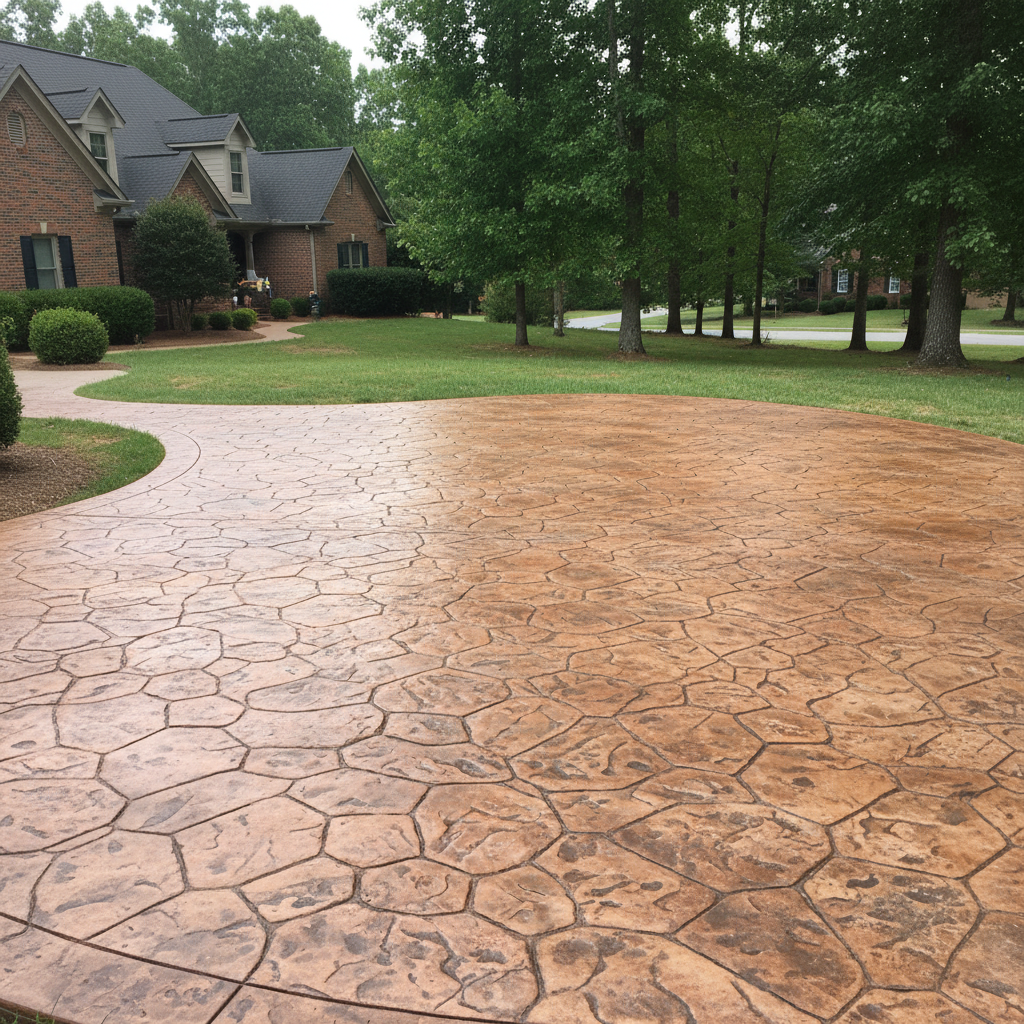
Some stamped concrete patios around Oak Ridge look sharp year after year while others start fading and flaking after just a few winters. It usually comes down to maintenance. Here in East Tennessee, our weather keeps outdoor surfaces active. We get heavy spring downpours, humid summers, and sudden winter freezes that test every square inch of outdoor flatwork.
Valley Concrete pours a lot of stamped surfaces across Anderson County, and proper installation is only half the battle. What you do after Valley Concrete packs up our tools makes all the difference for your stamped concrete.
The Secret to Longevity: Sealing on Schedule
Sealer is very important for stamped concrete. It locks out moisture, protects the color hardener from UV fading, and keeps stubborn stains from grease or autumn leaves from soaking into the pores of stamped concrete. If you skip sealing, water gets inside the microscopic gaps. When that water freezes during a cold snap down by Melton Lake, the water expands and starts spalling the surface of stamped concrete.
You generally want to reseal your stamped patio or driveway every two to three years. If you drop a few drops of water on the slab and it darkens the concrete immediately instead of beading up like rain on a fresh wax job, it is time for a new coat of sealer.
What Regular Upkeep Actually Looks Like
You do not need fancy gear to keep stamped concrete clean. A standard leaf blower is a daily weapon against Oak Ridge's heavy fall foliage. Wet leaves sitting on stamped concrete for weeks will leach tannins and leave ugly yellow stains, especially on lighter slate or ashlar patterns.
Give the slab a good wash every spring with a gentle garden hose and a mild dish soap. Avoid harsh acid washes unless you are prepping for a complete reseal. Put away the heavy-duty pressure washer or turn down the PSI. Blasting stamped concrete with high pressure will strip the sealer right off and can even pit the decorative surface of stamped concrete.
When winter rolls around, ditch the metal snow shovel. Use a plastic shovel or a stiff broom, and skip the rock salt entirely. Calcium chloride or plain sand is much kinder to decorative concrete.
Warning Signs You Should Not Ignore
Concrete talks to you if you know how to listen. Keep an eye out for these red flags on your stamped concrete:
- A milky or cloudy appearance, which means trapped moisture under an old layer of sealer.
- Faded patches where the color looks washed out from sun exposure.
- Hairline cracks that seem to be growing or widening after a heavy freeze.
- White, powdery residue known as efflorescence, that white powdery substance, pushing up through the surface.
When to Call a Professional
Some jobs are easy weekend projects, but others require a professional touch. If your sealer is peeling in ugly patches, stripping it completely and applying a fresh, even coat without messing up the underlying stamp pattern takes specialized solvents and experience. If you spot cracks wider than a nickel or notice sections of the slab sinking due to our shifting local clay soil, give Valley Concrete a call before small shifting turns into a major replacement project for your stamped concrete in Oak Ridge, Tennessee.